
LPG Gas Bottle, Gas Cylinder Location Regulations & Gas Compliance Certificate
Learn everything about LPG from South Africa’s largest LPG provider.
LPG Gas Bottle Location Regulations & Gas Compliance Certificate
Your New Gas Installation:
Call us on 083 592 5450 to book a technician
LPG gas bottle location regulations determine where you are permitted to install your gas bottles. The gas compliance certificate is issued to the property owner by the gas fitter, after completion of a gas installation or modification.
We are frequently asked about the proper clearance and placement of the gas cylinders.
It is very important that cylinder positioning meets the applicable South African Standards.
New to LPG?
See Everything You Need to Know About LPG Gas
LPG Gas Bottle Location Regulations – Installation Guidelines
In summary:
- Ensure the gas bottle installation is upright and stable.
- Keeping the gas cylinder upright will ensure the pressure relief valve functions correctly.
- Gas bottles must be placed on a solid base that is not subject to the accumulation of water.
 Gas bottles must be placed safely away from ignition sources — primarily electrical devices and flames — including include electrical switches, power points, air conditioning, compressors, pumps, lights, and sensors in the event of a leak.
- Gas bottles cannot be placed close to wall openings, including windows, doors and vents, to preclude possible entry and collection of gas in enclosed spaces.
- Gas bottles must be a safe distance from openings to below ground spaces, for instance drains and pits, to prevent any possible build up of the heavier than air LPG.
- Gas bottles must be placed in well ventilated locations, avoiding alcoves, enclosures, under a building or stairway to prevent possible accumulations of gas.
- Line of sight must be maintained for in situ tanker deliveries.
- Ensure your installation point provides easy access during gas cylinder delivery and replacement and meets South African Standards.
- Please read more for additional information and the required safe distances for placement…
Why You Need to Know
In addition, homeowners need to understand the requirements if they install other devices, such as air conditioners, after the gas installation is already complete.
 The image shown does not comply with the regulations, as the air conditioning compressor is well within the exclusion zone.
The gas supplier is not allowed to provide gas to this installation.
Not knowing the rules could cost you money, to have either the gas bottle or compressor moved.
Tradesmen, other than gas fitters, would not necessarily understand the required clearance and placement restrictions when they install other gear on your home.
While your gas fitter will be well versed in proper gas cylinder placement, you should also be knowledgeable regarding the requirements:
Wall Openings and Drains Affect Gas Bottle Location
In the unlikely event of a gas leak, you want to minimise the chance of gas entering any enclosed area, so a safe distance must be maintained from all wall openings.
Drains and pits are also an issue, as LPG is heavier than air and can collect in low set places.
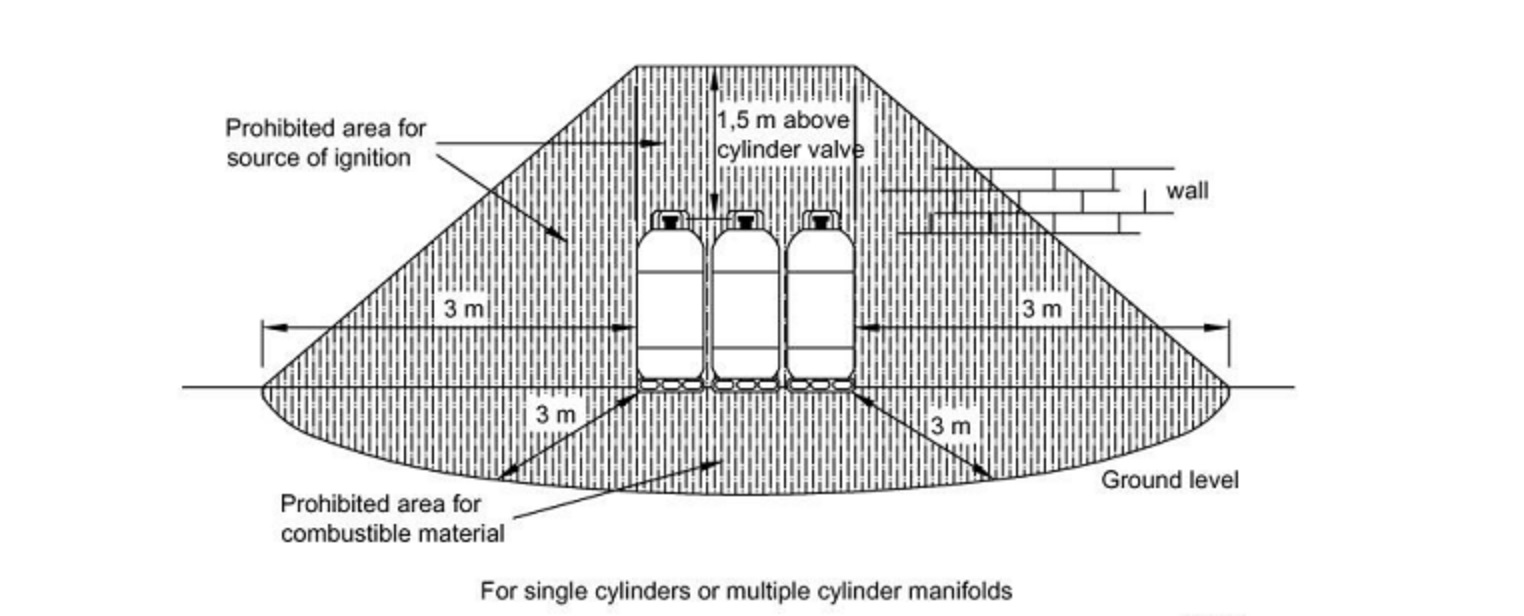
The graphic below shows the minimum distance clearance to be maintained from various wall openings and drains:
The graphic below shows the minimum distance clearance to be maintained
What is a Gas Compliance Certificate?
In summary:
- A gas compliance certificate is documentation that the gas installation complies with the standards and regulations issued by the governing body.
- It is issued by the gas fitter who performed the installation.
- The gas fitter is typically liable to correct any installation related defects.
- It may vary in form and can be a certificate.
- It let’s gas suppliers know that the installation is safe to supply.
-
Gas Fitters Provide the Certificates
All gas installations in South Africa must be performed by a licensed gas fitter.After installing and commissioning a gas appliance at your home, the licensed gas fitter must supply you with a copy of an installation certificate and/or fix a compliance plate or badge to the installation.The gas fitter is required to issue a compliance certificate to the owner for any alteration or extension to an existing gas service or a new gas installation. -
What Do They Mean?
Licensed gas fitters self-certify that their gas installation work complies with all relevant regulations, standards and codes by issuing a compliance certificate to you.The compliance certificate contains a declaration, by the gas fitter, that your installation complies with all standards and requirements.Protection For You
This is actually protection for you, if any problems develop later.If the problems are the result of faulty workmanship, the gas fitter will be required to fix the defect.No Gas Without One
Compliance certificates are also necessary for obtaining your gas supply, as gas providers cannot supply an uncertified installation.
The certificate needs to be available before the gas is connected for the first time.